Skip to content

Website concept · sample team, reviews and contact details · illustrative AI imagery · This website is for sale — see what’s included

Cedar CreekFamily Dental

Restorative dentistry

  • Done under a microscope
  • Usually one or two visits

Root canal treatment

When the nerve inside a tooth is inflamed or infected, a root canal relieves the pain and lets you keep the tooth.

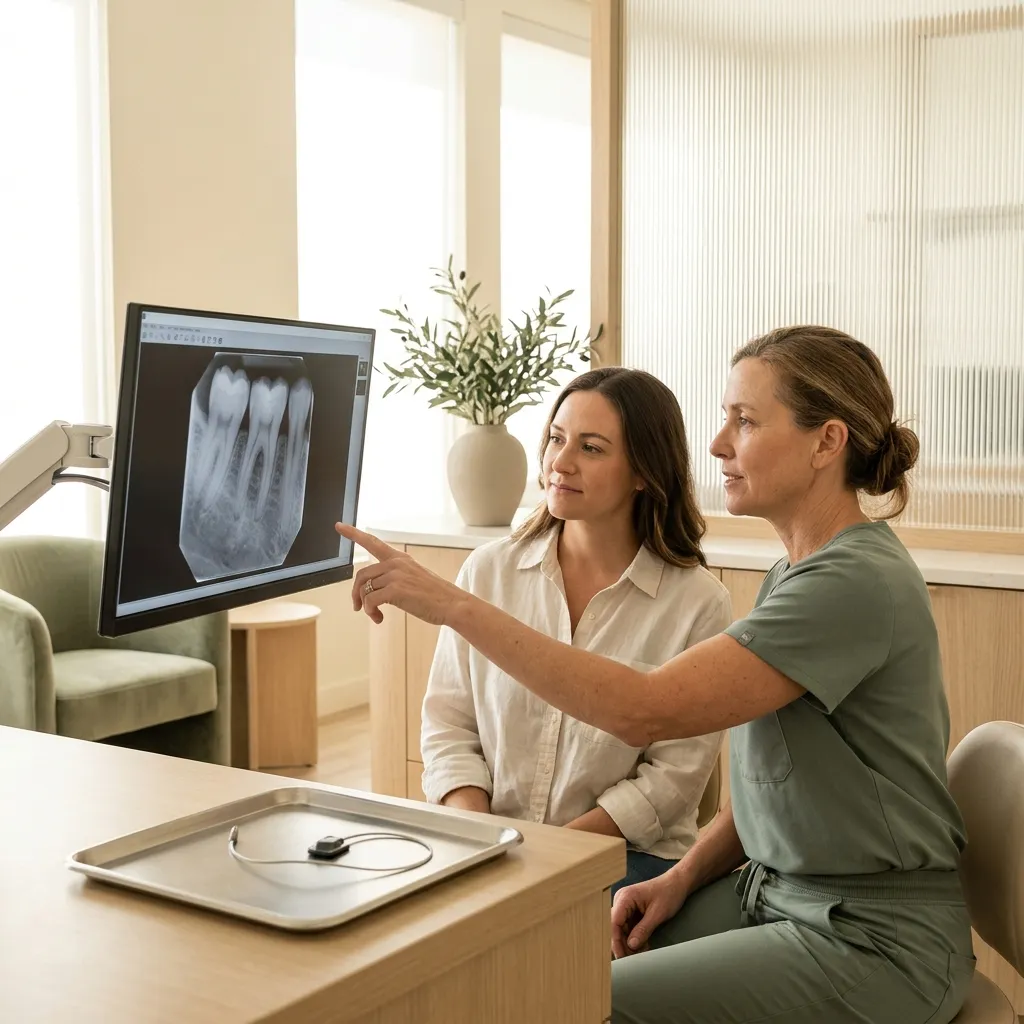
A dentist explains an X-ray to a relaxed patient

01Signs

Does it sound like a root canal?

Call us today

Don’t wait

  • Severe pain that keeps you awake
  • Swelling of the gum or face
  • A pimple on the gum that comes back
  • Pain that throbs on its own

Book an exam

Have it checked soon

  • Pain from hot or cold that lingers after it’s gone
  • A tooth that is tender to bite on
  • A tooth that has turned darker
  • A deep cavity or a large old filling

Usually not a root canal

Mention it at your checkup

  • Brief sensitivity to cold that fades in seconds
  • Sensitivity after whitening
  • Aching upper back teeth during a sinus cold

02How it goes

How the treatment goes

  1. Day 1

    Numbing and a rubber dam

    An X-ray, then the tooth is numbed and isolated so it stays clean and dry.

  2. 60–90 min

    Cleaning the canals

    Under the microscope, each canal is cleaned, shaped, disinfected and sealed.

  3. Next days

    A little tenderness

    Usually mild and eased with over-the-counter pain relief.

  4. 2–4 weeks

    A crown for back teeth

    It protects the tooth so it can last for years.

$700–$1,500 per tooth, before the crownMany PPO plans cover part of this treatment.

03Is it for you

Signs a tooth may need it

  • Lasting pain, especially when chewing
  • Sensitivity to hot or cold that lingers
  • Swelling or a small bump on the gum near the tooth
  • A tooth that has darkened after an injury

Some teeth need a root canal without any pain — we find them on X-rays.

04How we work

Our clinical standards

The details that make a difference to how this treatment is done — and why we do them.

  • A rubber dam, always

    Every root canal is done with a rubber dam, as the American Association of Endodontists requires: it keeps the tooth free of saliva and bacteria and protects you.

  • Under the microscope

    A dental microscope helps find every canal, including the hidden extra canal often found in upper molars.

  • Electronic length measurement

    An apex locator measures each canal’s length precisely, so it is cleaned to the end — with fewer X-rays.

  • Flexible nickel-titanium files and thorough disinfection

    Rotary NiTi files follow the curve of the canal, and the canals are rinsed with disinfecting solution before sealing.

  • 3D imaging when anatomy is unclear

    A small-area CBCT scan is taken only when a flat X-ray can’t show what we need.

  • A crown afterwards for back teeth

    Back teeth are protected with a crown after a root canal, which helps them last. Complex cases are referred to an endodontist.

07Cost and insurance

What it costs

$700–$1,500 per tooth, before the crown

Typical range in the US without insurance (2026 consumer cost guides). Your own estimate comes after the exam, in writing, before anything is done.

Front teeth usually cost less than molars, which have more canals. Complex cases may be referred to a root canal specialist (endodontist).

Dental insurance
Many PPO plans cover part of this treatment. We check your benefits and give you a written estimate before anything is done.
Monthly payments
Third-party financing such as CareCredit lets you spread the cost, if you’d like.
No insurance?
Ask about our membership plan: checkups, cleanings and X-rays for a yearly fee, plus a discount on treatment.

How cost and insurance work

08Questions

Questions patients ask

All questions

With modern anesthesia most people say it feels like a long filling. It usually relieves the pain that brought you in.

Often one visit of 60 to 90 minutes; some teeth need two visits.

Removing the tooth. Keeping your own tooth is usually the better option, and we’ll explain both choices and their costs.

Appointments

Request a visit for a painful tooth

If it hurts now, call us. Otherwise request an emergency visit or a consultation.

Appointment request

Request an appointment

Choose a visit type and a preferred time. Our team will contact you to confirm it.

Prefer the phone? (512) 555-0142 · Open the request page