What it is
A dental laser delivers a narrow beam of light energy that is absorbed by tissue. Different wavelengths are absorbed by different things — water, pigment, mineral — so each type of laser is good at different jobs.
| Type | Works on | Typical uses |
|---|---|---|
| Diode — ours | Gums and soft tissue | Gum reshaping, tongue-tie, mouth ulcers, gum-disease pockets |
| Erbium (Er:YAG, Er,Cr:YSGG) | Tooth, bone and soft tissue | Some small cavities without a drill |
| CO₂ | Soft tissue; some newer models also tooth | Soft-tissue surgery |
| Nd:YAG | Soft tissue | Specific gum-disease protocols, often by specialists |
When you compare practices, ask which laser they have — not only whether they have one.
What a laser treatment is like
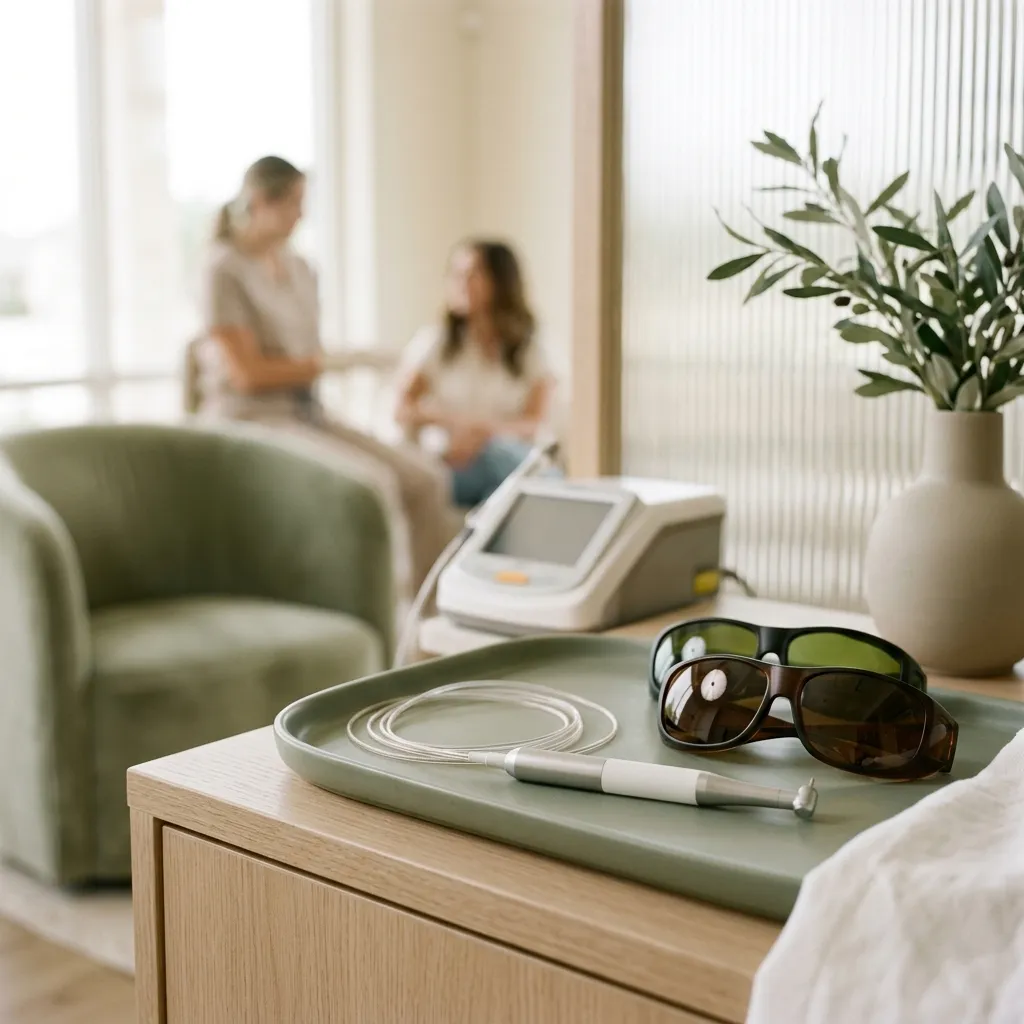
- Safety glasses. Everyone in the room — you included — wears tinted protective glasses.
- Numbing if needed. Many small laser treatments need little or no anaesthetic; for others we use a local anaesthetic as usual.
- A light, precise beam. You may notice warmth and a faint smell. The laser seals small blood vessels as it works, so there is little bleeding.
- Quick recovery. Most people go straight back to their day. We give you written aftercare.
What it changes — and what it doesn’t
What you gain
- Gum reshaping and small procedures without a scalpel
- Usually less bleeding and often no stitches
- Often less discomfort and faster healing of soft tissue
- Relief for painful mouth ulcers and cold sores
Its limits
- Our diode laser does not cut tooth or bone — it doesn’t replace the drill
- In gum-disease treatment it is an add-on to a deep cleaning, not a replacement; research on its long-term extra benefit is mixed
- Not every procedure is better with a laser — we use it where it helps
Safety
Dental lasers are cleared by the FDA for specific uses, and the main risk is to the eyes — which is why everyone wears protective glasses during treatment. Your dentist is trained in the laser’s settings and uses the lowest effective power.