What it is
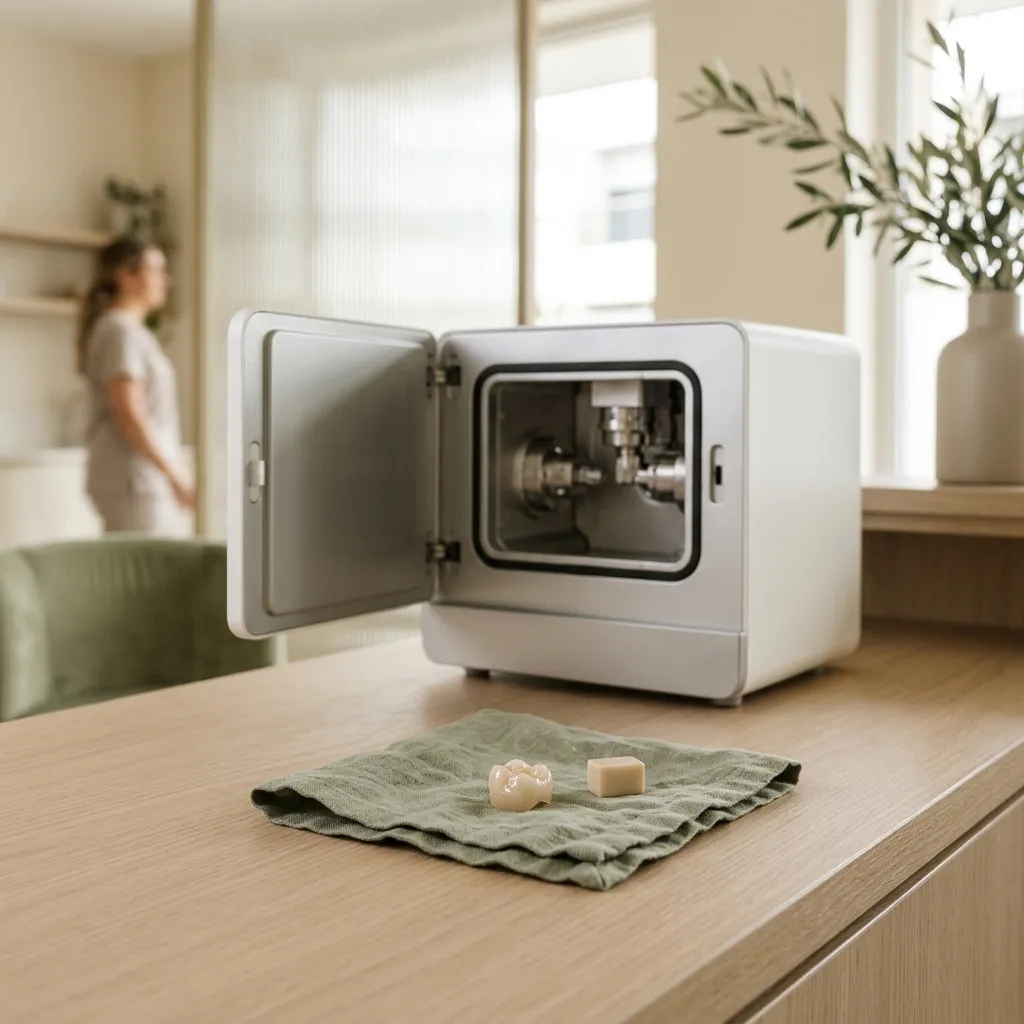
A same-day crown is made in the office with a small milling unit — a precise machine that carves the crown from a solid block of tooth-coloured ceramic. The design comes from a 3D scan of your prepared tooth, its neighbours and your bite.
Traditionally, a crown takes two visits: an impression and a temporary crown first, then a wait of about two weeks while a lab makes the final one. With in-office milling, the scan, the design, the milling and the fitting all happen in one appointment.
One numbing, one visit, no temporary crown to come loose.
How the visit goes
- Preparing the tooth. The tooth is numbed and shaped so the crown can sit over it.
- A 3D scan. A digital impression replaces the putty tray.
- Design on the screen. Your dentist designs the crown to match your bite and neighbouring teeth — you can watch.
- Milling and finishing. The crown is milled from ceramic, then polished or glazed to match the shade of your teeth.
- Fitting. The crown is checked, bonded in place and the bite adjusted. Plan for about two to three hours in all.
What it changes — and what it doesn’t
What you gain
- One numbing, one visit
- No temporary crown that can come loose
- Strong, metal-free ceramic in a natural shade
- You see the design before it is made
Its limits
- Some cases still go to a lab: long bridges, very complex front-tooth shading, some implant crowns
- The single visit is longer than each of the two traditional ones
- Whether your tooth suits a same-day crown is decided at the exam
Materials
Same-day crowns are made from modern dental ceramics such as lithium disilicate or zirconia — strong, metal-free and well tolerated. Studies of chairside ceramic crowns report long-term survival similar to lab-made ceramic crowns. Your dentist recommends the material for your tooth and explains why.