A little bleeding in the first days after you start flossing
Sore gums after brushing too hard
02How it goes
From diagnosis to healthy gums
Visit 1
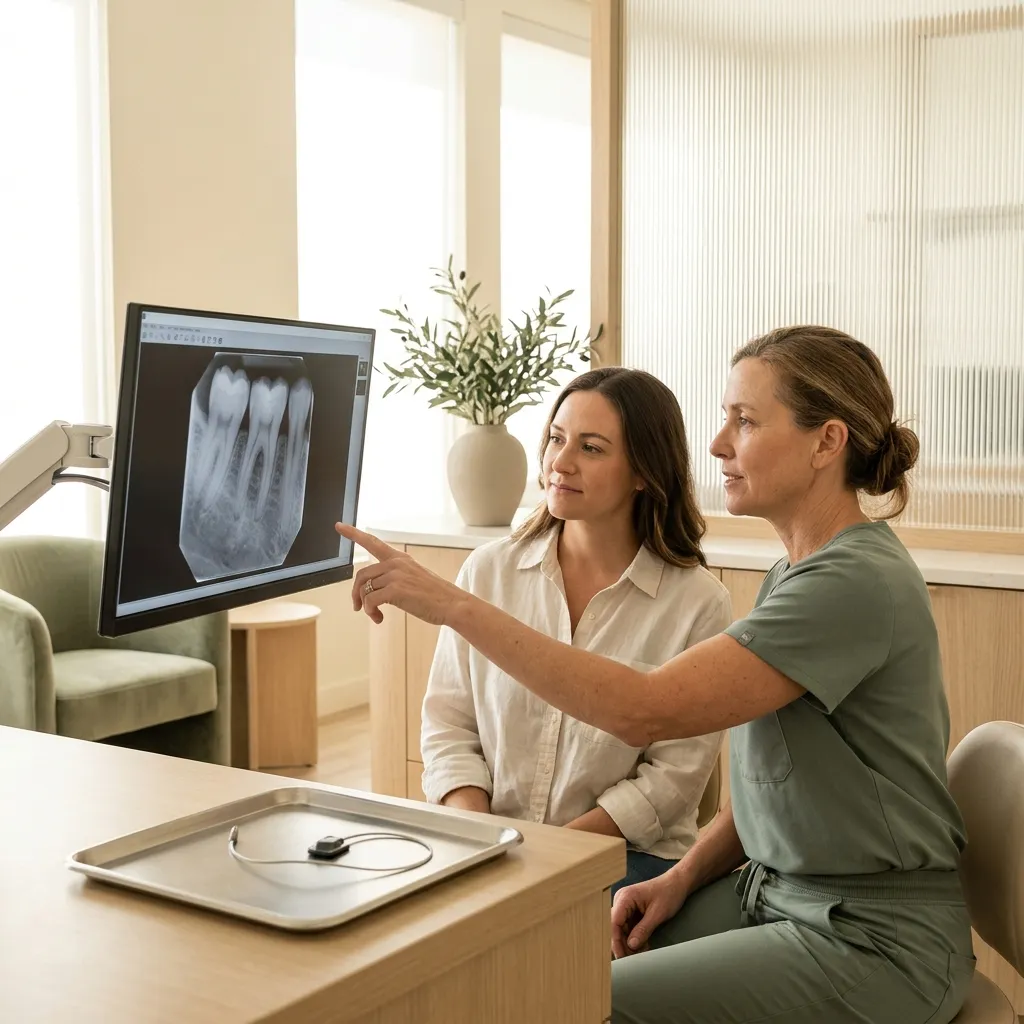
A full gum chart
Six measurements around every tooth and X-rays of the bone.
Visits 2–3
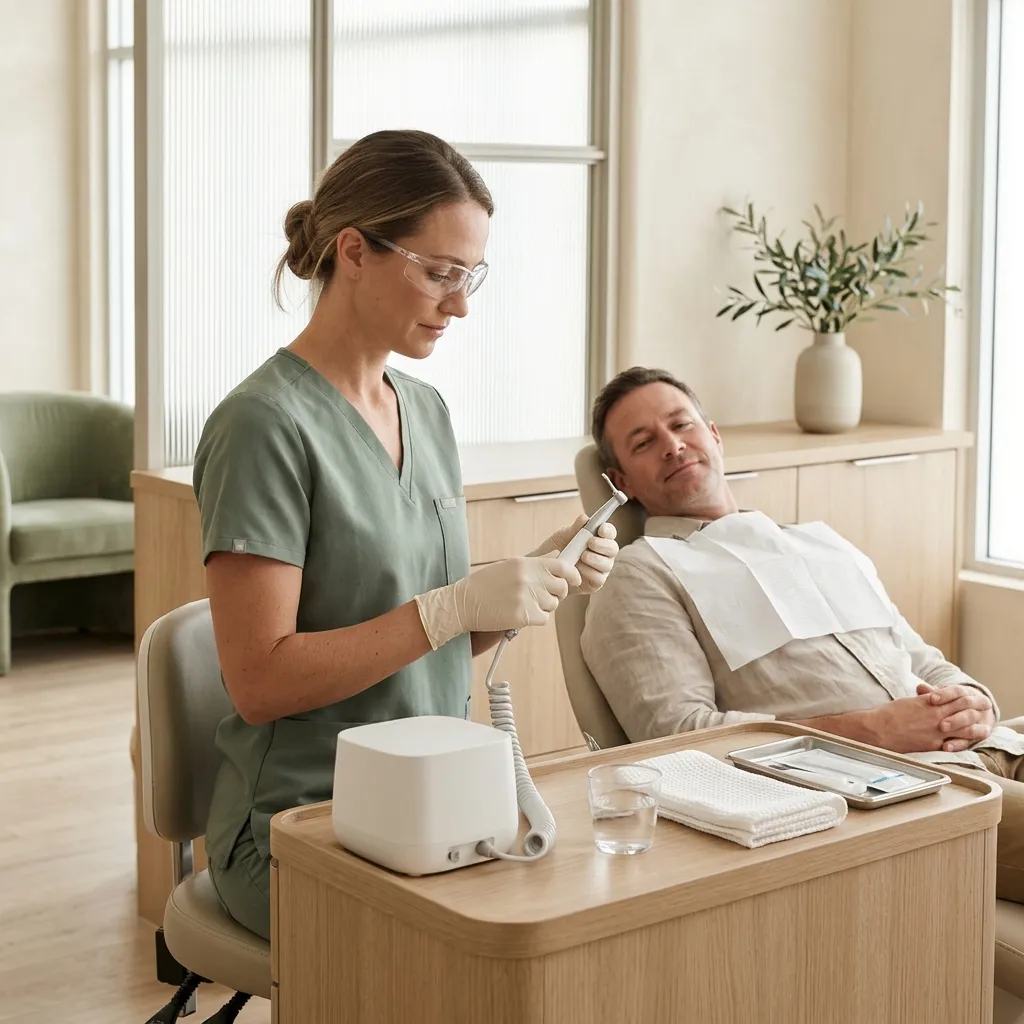
Deep cleaning
Scaling and root planing, a section at a time, under local anaesthetic.
4–8 weeks
Re-evaluation
We measure again to see how your gums responded.
Every 3–4 months
Maintenance
Closer cleanings keep the disease from coming back.
$200–$400 per quarter of the mouthMany PPO plans cover part of this treatment.
03Is it for you
Signs worth checking
Gums that bleed when you brush or floss
Red, swollen or tender gums
Bad breath that doesn’t go away
Gums pulling back, or teeth that look longer
Teeth that feel loose or have shifted
Early gum disease (gingivitis) often improves with a regular cleaning and better home care. When it has gone deeper, a deep cleaning is the usual first step.
04How we work
Our clinical standards
The details that make a difference to how this treatment is done — and why we do them.
A full gum chart before and after
Six measurements per tooth before treatment, and again at a re-evaluation four to eight weeks later, so you see whether it worked.
Deep cleaning under local anaesthetic
Scaling and root planing is done comfortably, usually in one or two visits, a section of the mouth at a time.
Add-ons only where they help
A laser or a locally placed antibiotic may be used in pockets that stay deep — we explain why before using them.
Maintenance every three to four months
After treatment, the American Academy of Periodontology recommends closer cleanings. We set the interval with you.
Referral when it’s beyond us
If bone loss is advanced, we refer you to a periodontist and coordinate with them.