Pain from hot or cold that lingers after it’s gone
A tooth that is tender to bite on
A tooth that has turned darker
A deep cavity or a large old filling
Usually not a root canal
Mention it at your checkup
Brief sensitivity to cold that fades in seconds
Sensitivity after whitening
Aching upper back teeth during a sinus cold
02How it goes
How the treatment goes
Day 1
Numbing and a rubber dam
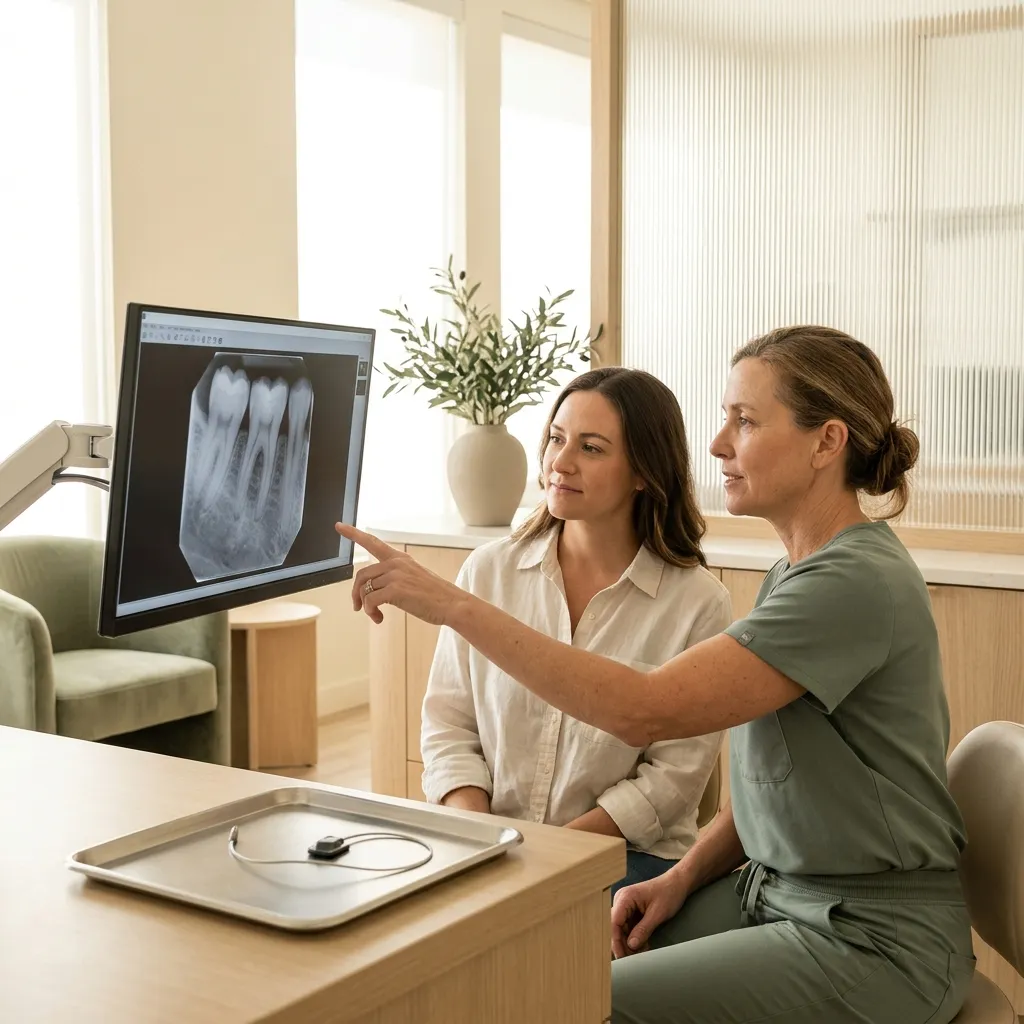
An X-ray, then the tooth is numbed and isolated so it stays clean and dry.
60–90 min
Cleaning the canals
Under the microscope, each canal is cleaned, shaped, disinfected and sealed.
Next days
A little tenderness
Usually mild and eased with over-the-counter pain relief.
2–4 weeks
A crown for back teeth
It protects the tooth so it can last for years.
$700–$1,500 per tooth, before the crownMany PPO plans cover part of this treatment.
03Is it for you
Signs a tooth may need it
Lasting pain, especially when chewing
Sensitivity to hot or cold that lingers
Swelling or a small bump on the gum near the tooth
A tooth that has darkened after an injury
Some teeth need a root canal without any pain — we find them on X-rays.
04How we work
Our clinical standards
The details that make a difference to how this treatment is done — and why we do them.
A rubber dam, always
Every root canal is done with a rubber dam, as the American Association of Endodontists requires: it keeps the tooth free of saliva and bacteria and protects you.
Under the microscope
A dental microscope helps find every canal, including the hidden extra canal often found in upper molars.
Electronic length measurement
An apex locator measures each canal’s length precisely, so it is cleaned to the end — with fewer X-rays.
Flexible nickel-titanium files and thorough disinfection
Rotary NiTi files follow the curve of the canal, and the canals are rinsed with disinfecting solution before sealing.
3D imaging when anatomy is unclear
A small-area CBCT scan is taken only when a flat X-ray can’t show what we need.
A crown afterwards for back teeth
Back teeth are protected with a crown after a root canal, which helps them last. Complex cases are referred to an endodontist.