Preventive care
- No numbing, no drilling
- About 30 minutes
- Often covered for children
Sealants and fluoride
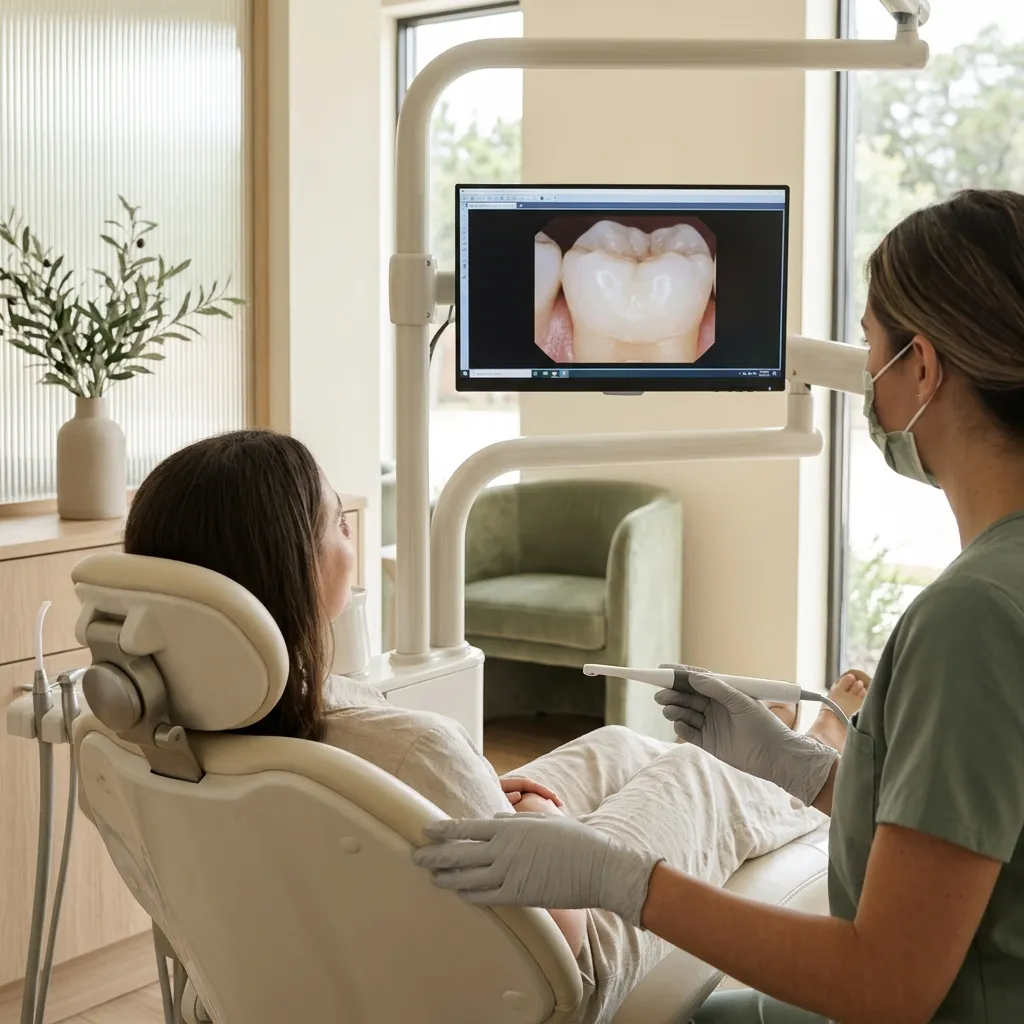
Two quick, painless ways to protect teeth from cavities — especially the deep grooves of back teeth.

01Your visit
Sealants in half an hour
-
0–5 min
Cleaning the grooves
Each back tooth is brushed clean.
-
5–15 min
Dry and isolated
Sealants only stick to a clean, dry tooth.
-
15–25 min
Painted and set
A thin coating flows into the grooves and is hardened with a light.
-
25–30 min
Fluoride and a check
Varnish painted on in seconds; the bite is checked.
03Is it for you
Who they help
Sealants are thin protective coatings on the chewing surfaces of back teeth, most often placed on children’s molars soon after they come in. Adults with deep grooves can benefit too.
Fluoride varnish strengthens enamel and is often recommended for children and for adults with a higher risk of cavities.
04Cost and insurance
What it costs
$30–$60 per tooth (sealant)
Typical range in the US without insurance (2026 consumer cost guides). Your own estimate comes after the exam, in writing, before anything is done.
Fluoride varnish is usually a small charge added to a cleaning visit.
- Dental insurance
- Many plans cover sealants on children’s permanent molars and fluoride for children. We check your plan first.
- Monthly payments
- Third-party financing such as CareCredit lets you spread the cost, if you’d like.
- No insurance?
- Ask about our membership plan: checkups, cleanings and X-rays for a yearly fee, plus a discount on treatment.
05How we work
Our clinical standards
The details that make a difference to how this treatment is done — and why we do them.
-
Clean, dry grooves before sealing
A sealant only lasts on a clean, dry tooth, so each one is isolated and prepared carefully.
-
Sealants checked at every visit
We check each sealant at checkups and repair it if part has worn away.
-
Fluoride varnish by risk
Children (and adults with a high risk of decay) get fluoride varnish as the AAPD and ADA recommend — painted on in seconds.
06Technology
The technology we use
All our technology07Questions
Questions patients ask
Often soon after the permanent molars come in — around age 6 and again around age 12.
Yes. Sealants have been used for decades and are recommended by the American Dental Association for children’s molars.
Appointments
Request a visit for your child
Choose “Cleaning and exam”, and pick Megan if you like — she sees most of our younger patients.
Preventive care