Restorative dentistry
- Gentle, bone-saving technique
- Next-day check-in call
Tooth extractions
When a tooth can’t be saved, we remove it gently — and talk through what replaces it before you decide.

01Signs
Does a tooth need to come out?
Call us today
Don’t wait
- Swelling and pain around a wisdom tooth
- Pain with a fever
- A broken tooth that hurts
- (Swelling spreading to the eye or neck: go to the ER)
Book an exam
Have it checked
- A wisdom tooth pressing or coming in crooked
- A loose adult tooth
- A tooth broken below the gumline
Often it can be saved
Ask about the alternatives
- A deep cavity — often a root canal and a crown
- A cracked crown or filling
- A tooth loosened by early gum disease
02How it goes
Before, during and after
-
Before
Planning
An X-ray — and a 3D scan if a wisdom tooth sits near the nerve.
-
20–40 min
The extraction
Numbed first; you feel pressure, not pain.
-
First 24 h
Rest and gauze
No straws, smoking or hard rinsing, so the socket heals.
-
Next day
We call you
To check how you feel; most people are back to normal within a few days.
$150–$400 simple extractionMany PPO plans cover part of this treatment.
03Is it for you
When removing a tooth is the best option
- A tooth broken below the gumline or too damaged to repair
- Advanced gum disease with a loose tooth
- Crowding before orthodontic treatment
- A wisdom tooth causing problems
We always tell you whether the tooth could be saved and what that would involve.
04How we work
Our clinical standards
The details that make a difference to how this treatment is done — and why we do them.
-
3D imaging for wisdom teeth near a nerve
If a lower wisdom tooth is close to the nerve on a regular X-ray, we take a small-area CBCT scan before removing it.
-
Gentle, bone-saving technique
Teeth are loosened with fine instruments and sectioned when needed, to protect the surrounding bone and gum.
-
Planning for what comes next
If an implant may follow, we can place a bone graft in the socket the same day to preserve the space.
-
Written aftercare and a next-day call
You leave with written instructions, and we call you the next day to see how you are.
05Technology
The technology we use
All our technology-

01
3D cone-beam imaging (CBCT)
One quick scan shows bone, roots and nerves in 3D — for planning implants, wisdom-tooth removal and complex root canals precisely.
How it works -
02
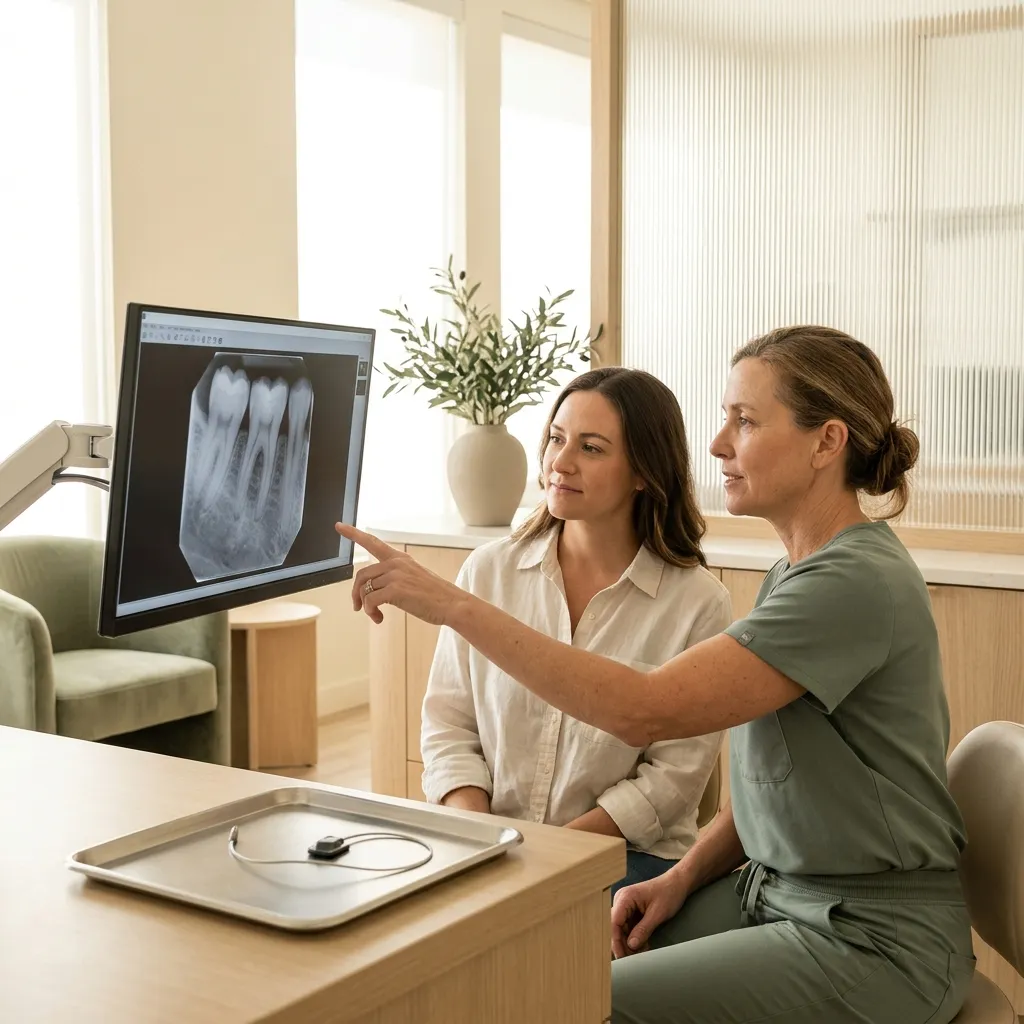
Digital X-rays
Low-dose sensors instead of film. The image appears on the screen in seconds, so we can look at it together.
How it works -

03
Nitrous oxide (“laughing gas”)
Light sedation you breathe through a small mask. It wears off within minutes, so most people can drive home.
How it works
06Who does it

The people you’ll see
07Cost and insurance
What it costs
$150–$400 simple extraction
Typical range in the US without insurance (2026 consumer cost guides). Your own estimate comes after the exam, in writing, before anything is done.
A surgical extraction, for example a wisdom tooth below the gum, costs more. Some complex cases are referred to an oral surgeon.
- Dental insurance
- Many PPO plans cover part of this treatment. We check your benefits and give you a written estimate before anything is done.
- Monthly payments
- Third-party financing such as CareCredit lets you spread the cost, if you’d like.
- No insurance?
- Ask about our membership plan: checkups, cleanings and X-rays for a yearly fee, plus a discount on treatment.
08Questions
Questions patients ask
The gum usually feels normal within one to two weeks; the bone keeps healing for a few months.
Often yes, to keep neighbouring teeth from shifting. We’ll explain implants, bridges and dentures.
Yes, with local anesthesia or nitrous oxide.
Appointments
Request a consultation
We’ll check the tooth and explain whether it can be saved.
Restorative dentistry