What it is
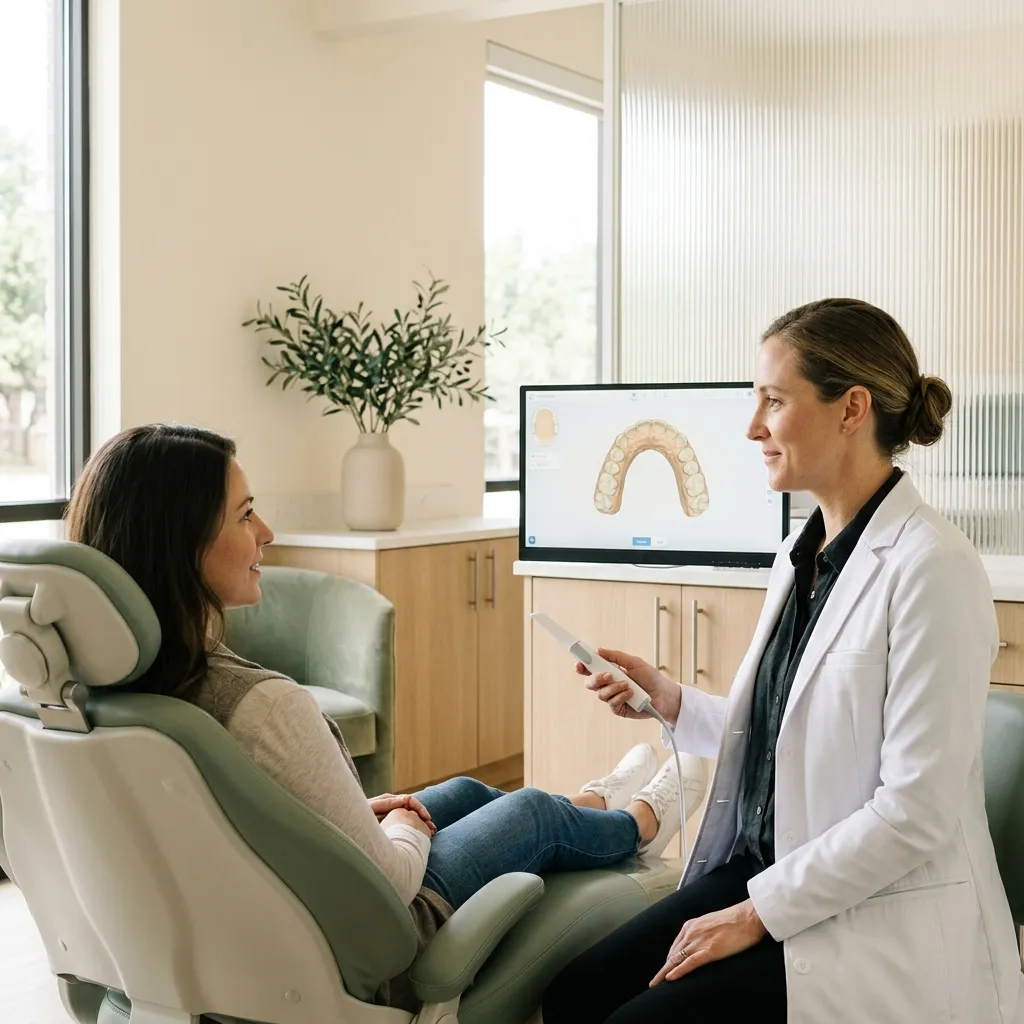
An intraoral scanner is a wand about the size of an electric toothbrush with a camera in its tip. As it moves over your teeth it takes thousands of pictures a second, and software stitches them into an accurate 3D model of your teeth, gums and bite.
That model replaces the traditional impression — the tray of soft material you bite into and hold still until it sets. It goes straight to the software that designs your crown, aligners, night guard or implant plan, so nothing has to be poured in plaster or posted to a lab.
The scan appears on the screen as we go — you see your own teeth in 3D, not a tray of putty.
What a scan is like
- A quick dry-off. We dry your teeth with a little air — the camera sees best on a dry surface.
- The wand moves over your teeth. It doesn’t touch much and makes no noise. A full arch usually takes a few minutes; you can pause at any time.
- Your bite. You close together for a few seconds so the scanner records how your teeth meet.
- You see the result. The 3D model is on the screen right away. We can turn it, zoom in and show you what we’re planning.
What it changes — and what it doesn’t
What you gain
- No putty, no gagging on a tray
- A model you can see and understand, not just a description
- Fewer retakes: a missing spot is simply scanned again
- Faster, more predictable crowns and aligners
Its limits
- Very deep areas under the gum can still be hard to record
- Accuracy is excellent for single teeth; for full-arch work your dentist may combine it with other records
- It shows the surface of teeth — not cavities inside them or the bone (that’s what X-rays are for)
No radiation
The scanner is a camera that uses ordinary light. There is no X-ray exposure, so it’s fine for children and during pregnancy, and a scan can be repeated as often as it’s useful.