What it is
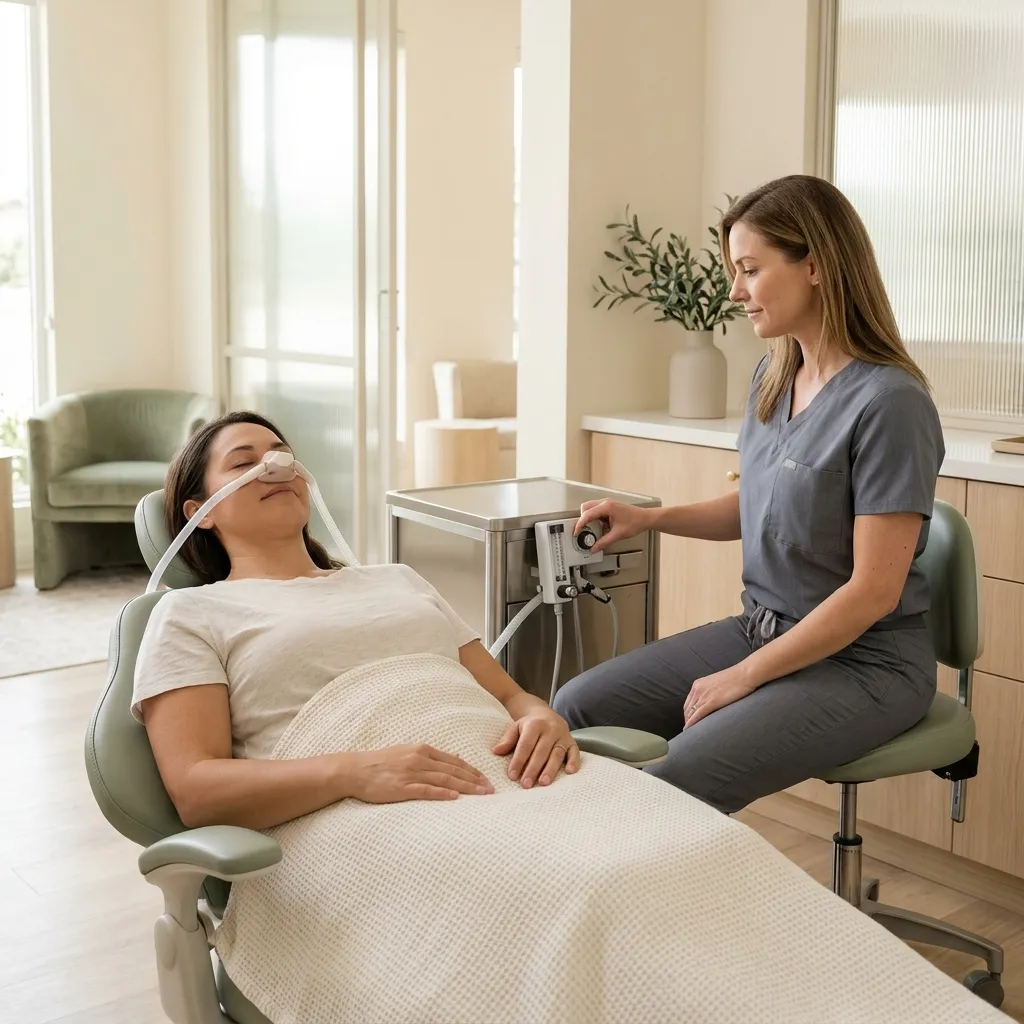
Nitrous oxide is a mild sedative gas mixed with oxygen and breathed through a small, soft mask over the nose. Within a few minutes most people feel relaxed, warm and a little light, sometimes with tingling in the hands or feet. You stay awake, can talk and answer questions, and remember the visit.
Your dentist adjusts the level during the visit and can turn it down at any moment. It is one of the most widely used and studied sedation methods in dentistry, for adults and children.
You stay awake, you can talk to us, and you can ask us to stop at any moment.
How it goes
- A short health check. We go through your health history and medicines and measure your oxygen level with a small clip on your finger.
- Breathing through the mask. The level is raised slowly until you feel comfortably relaxed.
- Treatment. You stay awake and can signal us at any time. The clip on your finger stays on throughout.
- Pure oxygen at the end. For a few minutes you breathe 100% oxygen, which clears the gas. Most people feel normal again within minutes.
What it changes — and what it doesn’t
What you gain
- Takes the edge off anxiety, gagging and long appointments
- Starts and stops within minutes, adjustable throughout
- No needles needed for the sedation itself
- Most adults can drive home afterwards
Its limits
- It relaxes but doesn’t numb — a local anaesthetic is still used for treatment
- For severe dental fear, stronger options may be discussed with you
- A blocked nose makes it harder to work
Who should not have it
Tell us if you are pregnant, have a lung condition such as COPD, a vitamin B12 deficiency, have had recent ear or eye surgery, or take methotrexate — and bring a list of all your medicines. In these cases nitrous oxide may not be right for you, and we’ll suggest another way to make the visit comfortable.
Eat only lightly in the two hours before. Children should come with a parent or guardian.